
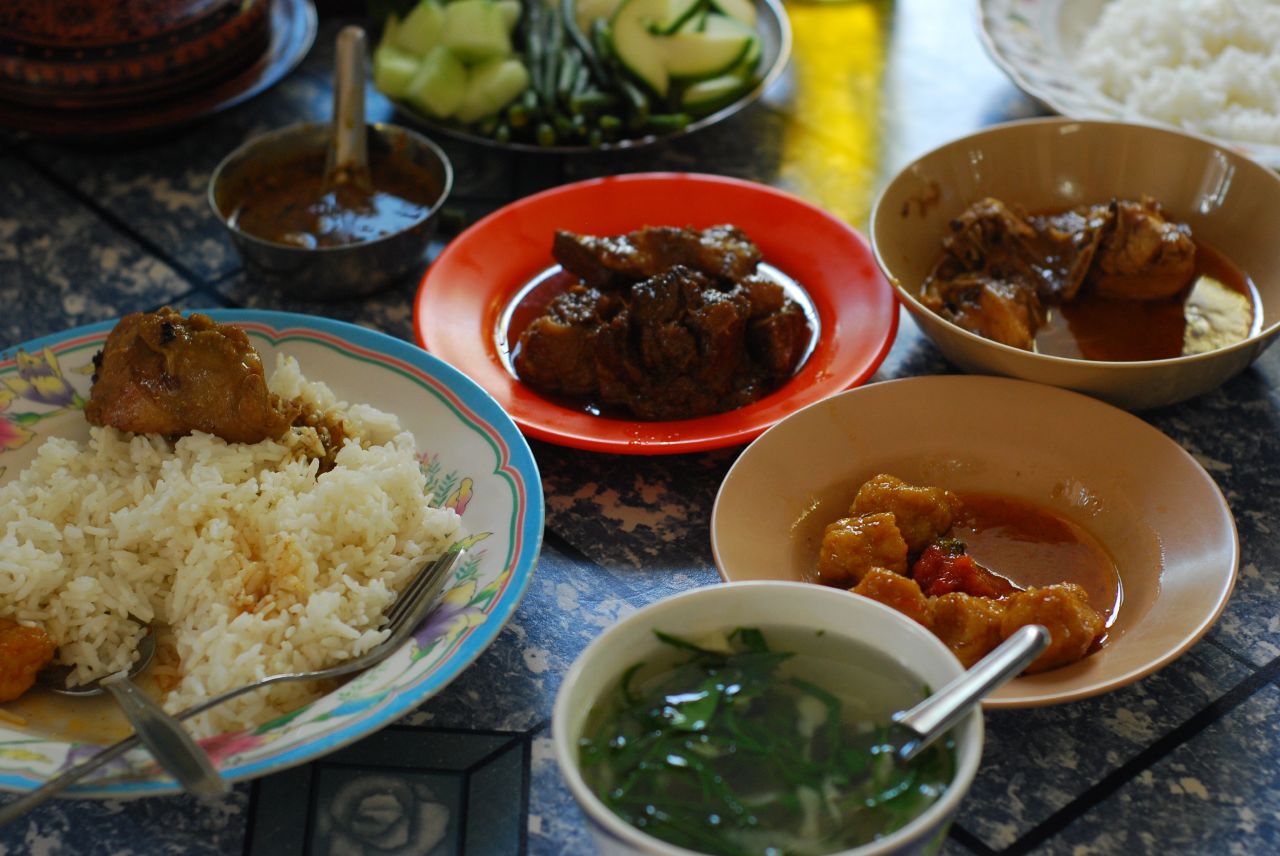
With a population of over seven million people food is very important to the Karen people of Burma (Myanmar). Although the Karen people are of diverse language and culture they share a passion for food. The majority of the Karen population focus on farming where they grow essential vegetables, rice, and raise animals; a typical meal would consist of those ingredients. Ashin Moonienda explains that a really good Karen meal would consist of large bowls filled with white rice, pork curry, stir-fried vegetables, and soup. On special occasions, like a marriage or festival, they will “cook noodles or eat sticky (glutinous) rice instead of normal white rice” (Moonienda 2011:25)
The Karen see food as a way of “expressing hospitality and creating bonds”; in fact, one of their common greetings essentially translates into “Are you done eating” (Moonienda 2011:25). Moreover whenever they have guests in their home they will invite them to eat as a courtesy, however, if they “really want their visitors to eat they will either move the table and food in front of them, or take them by their hands… to the eating area” (Moonienda 2011:37). The Karen people sometimes enjoy hunting and gathering food from the forests. Moonienda also explains that traditional Buddhist monks in the Karen culture typically eat once or twice a day but rarely “eat after midday”.
The Karen people are greatly affected by the civil war that has raged in their region since their independence from the United Kingdom in 1948. The war has led lots of people to flee the area and others have been relocated. For those refugees and even some villagers meals as large as those described above are rare; “a more common meal” [for them] would be rice, a few boiled vegetables and fish paste” (Moonienda 2011:25).
Overall, the Karen people don’t have the luxury of eating whatever they want as most people do in the United States. That does not deter them from eating a diverse diet of carbohydrates and proteins; farming their own food even makes it healthier. Food, like in many other cultures, is clearly a key component of their unique cultural diversity.
References
Image of Traditional Burmese (Karen) Foodhttps://creativecommons.org/licenses/by-sa/2.0/
Karen Buddhist Dhamma Dhutta Foundation
The karen people, http://www.karen.org.au/karen_people.htm, June 2, 2015.
Moonienda, Ashin
2011 The Karen People: Culture, faith and history. Karen Buddhist Dhamma Dhutta Foundation. http://www.karen.org.au/docs/Karen_people_booklet.pdf, June 2, 2015.

Being from a Cuban family I understand the role that food plays in a culture. None of my family gatherings are complete without enormous amounts of food. The philosophy is that you always make more food than you think will ever be eaten because there will always be someone who shows up unexpectedly. Sharing food, similar to the way in which the Karen people do, is a crucial aspect of my families background
ReplyDeleteFood brings my family together and it looks like it is used as a similar tool in the Karen culture. I'm blessed to live in the United States, however, I have visited Cuba many times and I know how difficult it is for countries with less resources to eat adequately. I can only imagine how hard it must be for an area having to also deal with a civil war. They do their best to make do with what they have.