https://creativecommons.org/licenses/by-sa/2.0/
Mission
The iCross-Cultural Citizen Project is a cultural anthropology course-based project meant to raise critical consciousness about the rich cultural diversity in our indigenous world. Being totally aware of the limitations of being outsiders, we are a group of multidisciplinary undergraduate students who believe in cross-cultural sensitivity and participatory agency aimed at disseminating information about indigenous realities as accurately as possible.
Vision
The iCross-Cultural Citizen Project’s vision is to create an online cross-cultural space for students, professionals, and youth to learn and exchange cross-culturally sensitive information about contemporary indigenous experiences. From that outsider student’s perspective, we will try to theoretically explore possible collaborative solutions to problems that affect the indigenous populations of our planet. Finally, we hope for the future creation of a space where indigenous youth can share their experiences and their realities with us for real mutual collaboration to take place.
Values
We value the maximization of benefits to indigenous peoples and other vulnerable populations in the world.
We value the respect for persons all over the world.
We value the equal treatment of people, and we are against the exploitation of vulnerable groups around the world.
We value collaborative cross-cultural learning and critical thinking.
Wednesday, June 3, 2015
Subsistence
https://creativecommons.org/licenses/by-sa/2.0/
Lifestyle
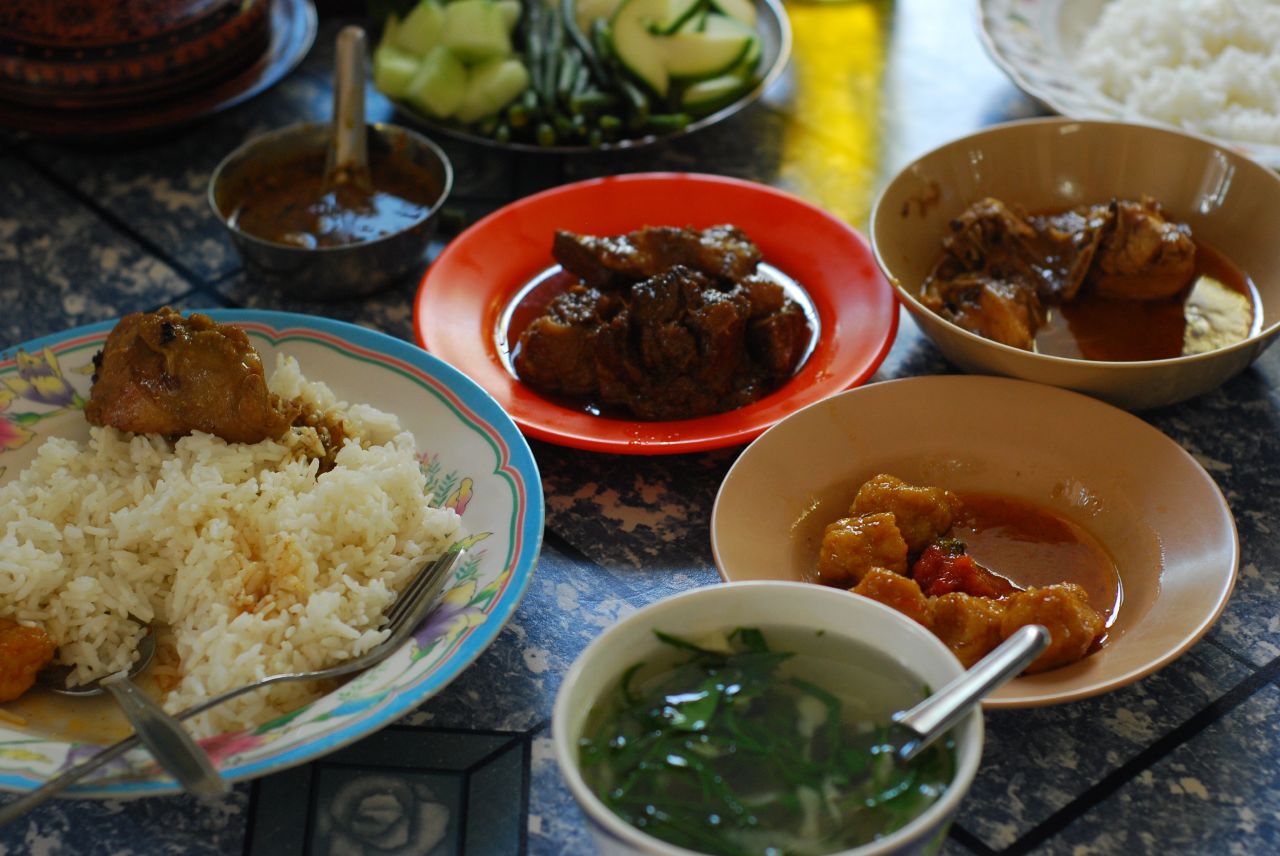
In most Karen villages the Buddhist monastery is the center of the community life, it is the home to the monks who are the leaders of not only religion, but also the community. They also serve as school teacher, activists, counselors, and doctors and care for the orphaned and homeless children (KBDDF). In the traditional Karen village there is not a lot to do day to day, so the people spend their free time visiting others in the village. There is no invitation necessary and hosts don't usually reject their visitors. Visitors will stay for anywhere from five minutes to even five hours and their hosts will always invite the visitor eat, which the visitor will politely decline (Moonienda 2011:37). For most villagers alcohol is a integral part of their culture. They will make a mildly alcoholic beer out of rice that will either be drank as is or further distilled into a whiskey. Men drink more than the women in the village and will sit in a large circle sharing a bottle and one cup. Drug use is very uncommon in the villages, however marijuana is grown for use in feeding the elephants and to be cooked into stews (Moonienda 2011:38).
While the above is true for a lot of Karen villages, the war has forced much of the population to flee to refugee camps across the Burma-Thai border. For the most part the diet in these camps remains the same and a majority of the refugees still work as farmers, however some refugees are employed by aid organizations to work in the camps. However some have sought employment outside the camps and are at risk of being detained, robbed, or raped (Moonienda 2011:39). Most of the refugees and their camps have been very well maintained and organized due to the upkeep the refugees have put into them. Most of the refugees keep a happy and pleasant attitude. The houses in the camp are built from bamboo and teak leaves and separated by vegetable gardens (Moonienda 2011:39). While drug use is not prevalent in the main villages, amphetamine usage is much more common in refugee camps. Additionally drinking is a much more common factor and the preventative measures used by the main villages to keep everyone safe are not found in the camps. Alcohol, drugs, and gambling have lead to a level of violence, poverty, and sexual abuse within the camps that is not found in the villages (Moonienda 2011:38).
References
KBDDF
The Karen People. http://www.karen.org.au/karen_people.htm 2 June 2015
Moonienda, Ashin
2011 The Karen People: Culture, faith and history. Karen Buddhist Dharna Dhutta Foundation. http://www.karen.org.au/docs/Karen_people_booklet.pdf 2 June 2015
Tuesday, June 2, 2015
Education
References:
Dr. Ryan, James. Interview by Luke Ryan. Siloam Springs, AR, May 24, 2015.
Poh, Toh. Interview by Luke Ryan. Kawthoolei, Karen State, Burma, Jan 15, 2015.
Htoo, Raykaw. Interview by Luke Ryan. Kawthoolei, Karen State, Burma, Jan 21, 2015.
Monday, June 1, 2015
Gender, Marriage and Family
Gender has always defined the position of men and women in society. In the indigenous society of the Karen, men and women have specific roles to follow. After marriage, men assume the role of head of the household and provider of the family. Women become the motherly figure of the home by performing the daily tasks of cleaning, cooking, taking care of the children and assisting her husband with any responsibilities. Although a foreign person might think that because of these typical gender roles assigned to the spouses that the Karen are a male dominated society, the Karen are actual one of the few indigenous that are matrilineal societies (Neiman, Soh, Sutan 2008). In a matrilineal society, ancestry is traced back through the mother's side and these ancestors are considered of higher authority.They are the head of the household while still receiving support from their husband. Clothing and beautification also play major roles in the typical gender roles of the Karen people. Before marriage, young women wear white clothing as a sign that they have yet to marry and begin to wear the popular "brass rings" to make themselves more attractive to potential suitors. After marriage, women can begin wearing colored clothing. Although pride comes with certain gender roles, this is not seen with the Karen contrary with other indigenous tribes.
Marriage is one of the biggest steps an adult can take in their lives. After exploring and learning about the Karen state, marriage partakes as a grand social occasion where families come together to form one. The suitable age for marriage in the Karen For most part, marriages are arranged by the families based on tradition and the religion that is practiced by the families. At times, the interested suitor can exchange love letters with the girl's family expressing his interests and intentions towards marrying the young girl. The Karen have three distinct religions that are Buddhism, Christianity, and Animist. Depending on whichever religion is practiced, wedding ceremonies are held and celebrated by the families of the newlyweds (Neiman, Soh, Sutan 2008). Animist is the major religion out of the three and for weddings, these occasions can become several days of celebration. After marriage, the man moves in with the woman's family, opposite to what other cultures might do after marriage. The husband begins to take care of his new family by providing the necessities.
Family is considered the nuclear core of society. For the Karen people, the family is the most fundamental element in society. Mainly composed of the extended family members, the Karen people will have multiple kids as this is a sign of prosperity within the family and they can also help around with the household chores. With this huge emphasis of the family being everything, in the little villages all families can just become one giant extended family and look out for one another. Sadly with the current civil war issues, many families and friends have separated due to fleeing for better security. Naming the sons and daughters in a Karen family is an important task that parents must do. Compared to how in different cultures a last name originates on who the person is a descendant of a particular person in society. For example, in Irish culture O'Brien might mean son of Brien or descendant of Brien. In Karen families, children are named based on significant events and their names will also include their distinct title in the family (Neiman, Soh, Sutan 2008). Regarding with the political and war issues currently affecting Burma, families have been separated and learned through these hardships how to handle different roles that pertained to a certain gender. For example, if the mother is the head of household after being separated from her husband she may now hunt and provide for her family.
2008 Karen Cultural Profile. https://ethnomed.org/culture/karen/karen-cultural-profile#section-3, May 31, 2015.
Religion
The Civil War in Burma has indirectly surged the amount of Christian believers in the Karen population. Organizations that support the Karen refugees are mainly made up of Christians. The Karen people see Christians as "the good guys" and so want to adopt the same religion as them. This then spreads quickly through friends and family members.